Arts at CERN: a website for the only client in the world bold enough to combine particle physics and art
We conceptualised, designed, wrote and built the website for CERN's art programme on Drupal, and supported it for six years: a unique space for a unique client.

The art programme of a one-of-a-kind laboratory
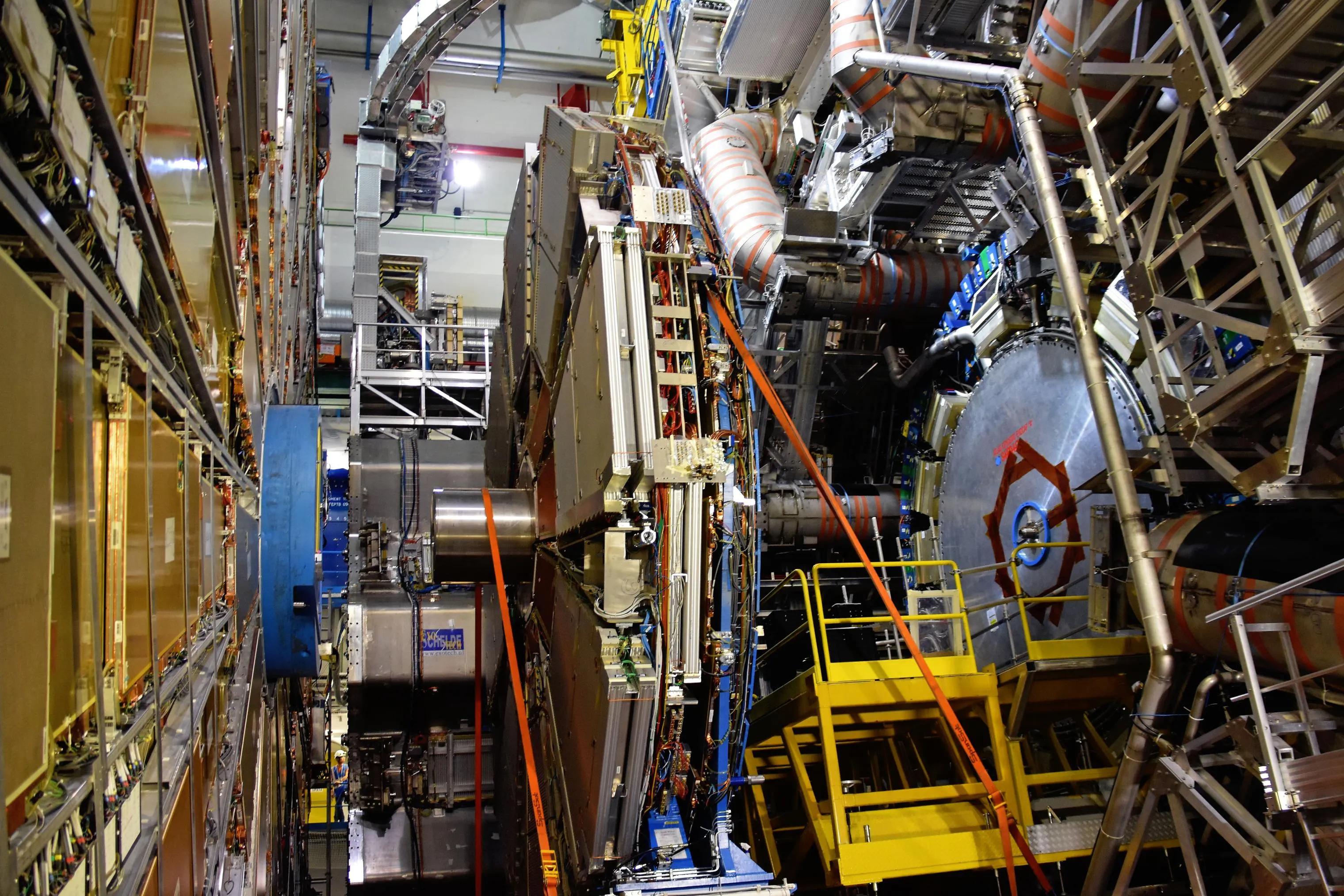
Arts at CERN is the official art programme of CERN, the European particle physics laboratory where thousands of scientists and engineers investigate the fundamental structure of the universe by pushing technology to its limits. The programme was launched in 2011 to explore human creativity and curiosity from that unrepeatable setting: through three residency programmes, artists from all over the world move to CERN's facilities, live there for weeks or months and work with particle physics specialists to bring that knowledge into their work. It's probably the only client in the world bold enough to combine particle physics with art, and a project we're especially proud of.
3
artist residency programmes
+14,000
scientists research at CERN
A surprising initiative deserved a surprising space
In 2016 the Arts at CERN website lived on CERN's standard template: correct, but unable to convey what makes the programme special. A two-person team, with no exhibition space of its own, needed an online presence that clearly explained why there's an art programme at CERN, what it offers artists and scientists and why its model is unique, and that reached audiences who don't usually come close to science: artists, funders, partners and donors.
The main goal was very specific: spread the word about the three residency programmes' open calls and get more artists to apply. And the design challenge was to convey the essence of a programme that tries to bring us closer to the beginning of our existence through art, with the added requirement that the website had to live on CERN's infrastructure and meet its technical specifications from day one.
Two worlds in one website: art and science on Drupal
We started with conceptualisation: the information architecture and navigation for a programme with three residencies, artists, news, events and open calls, designed so users always know where they are and what they can do, on desktop and mobile. The whole project was built around one idea: aligning the website with the message of innovation and discovery that inspires Arts at CERN.
In design we interpreted that idea literally. We combined photographs of the artists with the icon of the particle accelerator's cross-section, and looked for the palette in the accelerator itself: out of the multitude of colours it hides, we distilled two complementary pigments, the green of art's beauty and the red of physics' force. Two saturated, luminous colours that tell content apart, guarantee text legibility over the colour block and let photographs be tinted while keeping their continuity throughout the whole website. The animations follow the same logic: maximum coherence with the content and spirit of the project. We also wrote and edited the new website's content with the programme's team.
In development we built the front end and back end on Drupal, adapted to CERN's specifications and constraints, trained their team to manage the website with full autonomy, and deployed and optimised it within CERN's systems team environment. Then came the trickiest piece: the open calls' application form, handling the download of applications and all their supporting documentation so the jury could assess them.
And since launch, in 2018, we carried on with support: evolutionary improvements, maintenance, support and the migration to the next version of Drupal, always following CERN's specifications.
More artists applying and six years in production
The website met its main goal: the number of artists applying to the open calls grew, and the Arts at CERN team gained a tool to manage them from start to finish, with less time spent processing applications and a better process for everyone, from the artist applying to the jury assessing. With a team trained to work independently, the website stayed in production for six years, from 2018 to 2024, adapting to every change in CERN's specifications. In 2024 CERN moved its entire web ecosystem from Drupal to WordPress and put the new Arts at CERN website out to tender; we didn't win it, and the website published today is no longer ours. We're left with the good fortune of having taken part in a project like this, and the pride of everything we did.
- In production
- 6 years
- from 2018 to 2024, on the same base
- Team autonomy
- 100%
- content and open calls managed by Arts at CERN
How it turned out.
The website's homepage, with the residency open call currently on offer. Arts at CERN's three programmes, with the CERN introduction below. The sign-up blocks for the Arts at CERN newsletter and podcast.
¿EL SIGUIENTE CASO ES EL TUYO?
Hablemos