From 55 scattered digital spaces to one ecosystem: seven years as the Port of Barcelona's digital partner
Since 2019 we've helped the Port of Barcelona decide what its digital ecosystem should look like, and we build, maintain and evolve it: audit, strategy, conceptualisation, design, Drupal development and managed service.

The leading Iberian port for international traffic
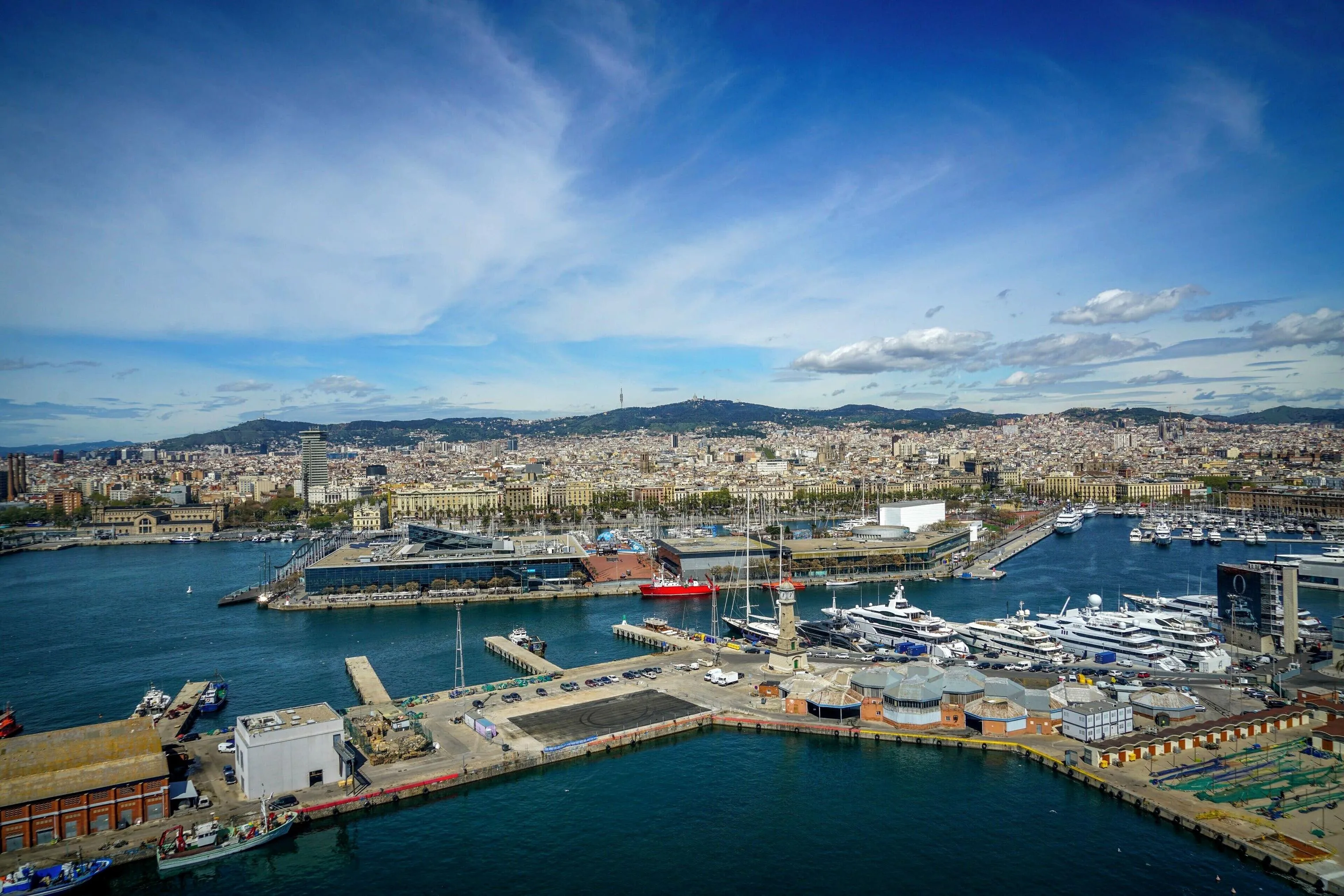
The Port of Barcelona is one of the Mediterranean's major logistics infrastructures and the leading port on the Iberian Peninsula for international traffic, run by the Barcelona Port Authority, a public body with a team of over 500 people. It handles almost a quarter of Spain's maritime trade, and around it works a port community of thousands of companies: logistics operators, shipping lines, importers and exporters, hauliers, and cruise and ferry terminals. But the Port is much more than a port: it's a backbone of economic activity, a benchmark in sustainability and innovation with its Smart Port model, and a part of the city of Barcelona, with which it shares a shoreline, urban uses and citizens. Each of these facets has its own audiences and digital needs, and in 2019 the Port Authority put the conceptualisation and design of its entire web ecosystem out to tender. We won it, and we've been its partner in every decision and action on its digital presence ever since.
24%
of Spain's maritime trade
113,343 M€
in goods a year
69.5 M
tonnes of total traffic a year
40,427
jobs
A digital ecosystem that had grown out of control
As happens in many large organisations, the Port's digital ecosystem had been built to fit the needs of each area as they arose: whenever a unit needed a website, it bought the domain, found a supplier and launched it. By 2019 the result was an almost unmanageable volume of sites, microsites, applications and private spaces, with different content management systems, different suppliers, different visual styles and different usability, around a corporate website that no longer matched what the Port is or what its audiences expect of it.
The truth is the Port doesn't fit into one website. It has a thousand facets, a thousand customers and a thousand functions: it operates as a port, does business, innovates, cares for its environment and lives alongside the city. Each of these facets needs its own digital spaces, with their own tools, content and audiences, and all of them need to feel part of the same institution.
The challenge wasn't to redesign a website, but to help the Port decide which digital spaces should exist, which should be merged in, which should keep their own identity and which should disappear, and how each one should work in concept, use, design, development, content, hosting and architecture. And then to build it, maintain it and grow it consistently over the years, at the level of demand of a public institution of this standing.
Audit, roadmap, Drupal as a common base and, since 2025, full management
We started by auditing the whole ecosystem. We tracked down satellite websites, applications and private spaces until we had an inventory of 85 entries, analysed more than 55 digital spaces in depth and held over 30 interviews with the people responsible for each one internally. With the Port's web steering committee, in co-creation sessions, we set the pillars of the new ecosystem: an intuitive, scalable information architecture, a consistent visual universe, multi-device products and a consistent data architecture, all in the service of four strategic axes: customer focus, innovation, sustainability and city.
From that came the roadmap: which spaces would be folded into the corporate website (tools such as the cost calculator, access times or ship calls, sub-sites and satellite spaces), which would keep their own identity (microsites such as PierNext or Smart Ports and private spaces such as the Electronic Office), which would just be referenced and which would change or disappear. And one foundational decision: standardise the technical solution on Drupal to reduce and consolidate the ecosystem.
In the conceptualisation and design of the new corporate website we defined audiences and topics, the information architecture, the content plan, the navigation, the wireframes and the interaction spec, and created the graphic system and a web style guide designed so that any Port project, whoever builds it, keeps the same identity.
In development we took on the project's technical direction: the website was built on Drupal with an external integrator that carried out what we defined, with bespoke front and back end, four languages, editorial governance and integrations with the Port's systems: notices, ship arrivals and departures, the cost calculator, regular shipping lines, the CRM and the newsletter and translation platforms. We prepared the launch with a migration to the current Drupal version, analytics and performance optimisation, and the website went live in early 2024. Since then, new or migrated sites in the ecosystem have been built on Drupal, on single or multisite instances depending on how they'll be managed and run and on their operating costs.
In 2025 the Port put the full management of web services and projects for its entire ecosystem out to tender, a multi-year agreement, and we won it again. Since then we've run the managed service, with managed cloud infrastructure, CMS maintenance and updates, security, monitoring, performance audits and bimonthly analytics and SEO reports, and we work side by side with the Port's digital transformation team to prioritise and launch its projects: the new Regular Shipping Lines integration, migrating PierNext to Drupal, the ecosystem's technology strategy, accessibility remediation for the corporate website, PierNext and the Electronic Office, the migration to Drupal 11, the SEO and GEO project, integrating forms with Salesforce, rethinking the sustainability and energy transition content, machine translation, a feasibility study for a SaaS model and a design system for the Port's bespoke applications. And we're already preparing the 2027 projects: Efficiency Network, the Port Center, the recruitment portal, the transparency portal and the Customer Service department.
A solid, secure and scalable ecosystem, and a trusted partner
The Port of Barcelona today has a reliable, well-performing, secure and scalable web ecosystem, worthy of an institution of its standing and of its audiences, whether citizens, institutions, industrial companies or corporate clients. Its corporate website keeps growing steadily, with users and sessions up around 9% in 2025, more than two-thirds of traffic coming from search engines, an engagement rate above 60% sustained since launch, and AI assistants already emerging as a measurable entry channel. And every new space is born on the same technical base, with the same style guide and the same service behind it. More than seven years after that first audit, we're still helping the Port decide what its digital presence should be and building, maintaining and evolving what's been decided: we've proven ourselves a trusted partner for a genuinely important institution with a high level of demand.
- Users and sessions
- +9%
- in 2025 versus 2024
- Traffic from search engines
- 68%
- of users over the last year
- Engagement rate
- +60%
- sustained since launch
How it turned out.
The homepage of the new corporate website, with direct access to the Port's key audiences. The figures block for investors and companies, one of the many faces that coexist on the corporate website. The regular shipping lines page, one of the integrations with the Port's systems that we rebuilt in Drupal.
Keep looking.
¿EL SIGUIENTE CASO ES EL TUYO?
Hablemos